It is 7 pm. Your baby was fed, burped and changed, and still the crying starts: red face, clenched fists, legs pulled up to the tummy. Nothing seems to work, and it happens again the next evening, and the next.
If this sounds like your home, you are not alone and you are not doing anything wrong. This is baby colic, one of the most common and most exhausting phases of early parenthood. Here is what colic really is, why it looks different in every baby, the gentle remedies Indian families have trusted for generations, and how the whole family can help mother and baby through it.
What is colic in babies?
Colic is long, intense, hard-to-soothe crying in a baby who is otherwise healthy, feeding well and gaining weight. Doctors often describe it with the "rule of threes": crying for more than 3 hours a day, on more than 3 days a week, for more than 3 weeks.
Typical signs of colic pain in a newborn:
- Crying that starts around the same time each day, often late afternoon or evening
- A high-pitched, inconsolable cry that sounds like pain
- A flushed face, clenched fists, arched back or legs drawn up to the tummy
- A hard or bloated tummy, and passing gas during or after crying
- Crying that continues even after feeding, burping and changing
The good news: colic is temporary. It usually begins around 2 to 3 weeks of age, peaks around 6 weeks, and settles by 3 to 4 months for most babies.
Colic is an umbrella, not a single illness
Here is what most parents are never told: colic is not one disease with one cause. It is an umbrella word for a pattern of crying, and many different things can sit underneath it.
A baby's digestive system and nervous system are both still developing in the first few months. So the same evening meltdown can come from trapped gas in one baby, a feeding issue in another, and plain overstimulation in a third. Very often it is a mix.
This is why one remedy works wonders for your friend's baby and does nothing for yours. The most useful thing you can do is play detective: notice when the crying starts, what came just before it, and what eases it. That tells you which kind of colic you are dealing with.
Types of colic and what helps each
Match what you see to the closest type below. Most babies show more than one.
|
Type of colic |
What you notice |
What usually helps |
|---|---|---|
|
Gas colic |
Hard, bloated tummy; baby strains, pulls legs up, cries less after passing gas or pooping |
Burping often during feeds, bicycle legs, warm oil tummy massage, warm compression on the tummy |
|
Feeding-related colic |
Gulping, clicking sounds, milk leaking from the mouth, crying soon after feeds |
Checking the latch, slower paced bottle feeds, an anti-colic bottle, smaller and more frequent feeds |
|
Reflux-related colic |
Frequent spit-ups, arching, discomfort when lying flat after feeds |
Holding baby upright for 20 to 30 minutes after feeds; speak to your paediatrician if it is frequent |
|
Allergy or intolerance colic |
Crying with eczema, rashes, mucus or blood in stool, or ongoing vomiting |
Needs a doctor's assessment; a feeding change should only be made on medical advice |
|
Overstimulation (sensory) colic |
Crying worsens after visitors, noise, bright lights or a busy day; often in the evening |
A dim, quiet room, swaddling, gentle rocking, white noise, skin-to-skin contact |
If you are breastfeeding, some mothers find certain foods in their own diet seem to upset the baby. Keep a simple food and crying diary for a week before cutting anything out, and check with your doctor so your own nutrition does not suffer.
Gentle home remedies for colic that Indian families trust
These traditional remedies work best for gas colic and a tense, uncomfortable tummy. Use them only after the umbilical stump has fallen off and the navel has fully healed, and on unbroken skin.
1. Warm oil massage around the navel
A warm oil massage is one of the simplest ways to ease colic pain. The gentle pressure helps move trapped gas along, supports digestion, and the warmth relaxes tight tummy muscles.
- Warm a teaspoon of a mild oil such as coconut or sesame oil until it feels just lukewarm on your inner wrist.
- Wait at least 30 minutes after a feed.
- With your fingertips, massage in slow clockwise circles around the navel, the same direction the gut moves food along.
- Follow with "I Love U" strokes and gentle bicycle legs to help release gas.
2. Hing around the navel
Hing (asafoetida) is a classic nani ka nuskha for gas. Mix a tiny pinch with a few drops of warm water or oil into a thin paste and apply it in a ring around the navel, not inside it. It is meant for the skin only; never give hing to a baby by mouth. Do a small patch test first and wipe it off if you see redness.
3. Warm compression on the tummy
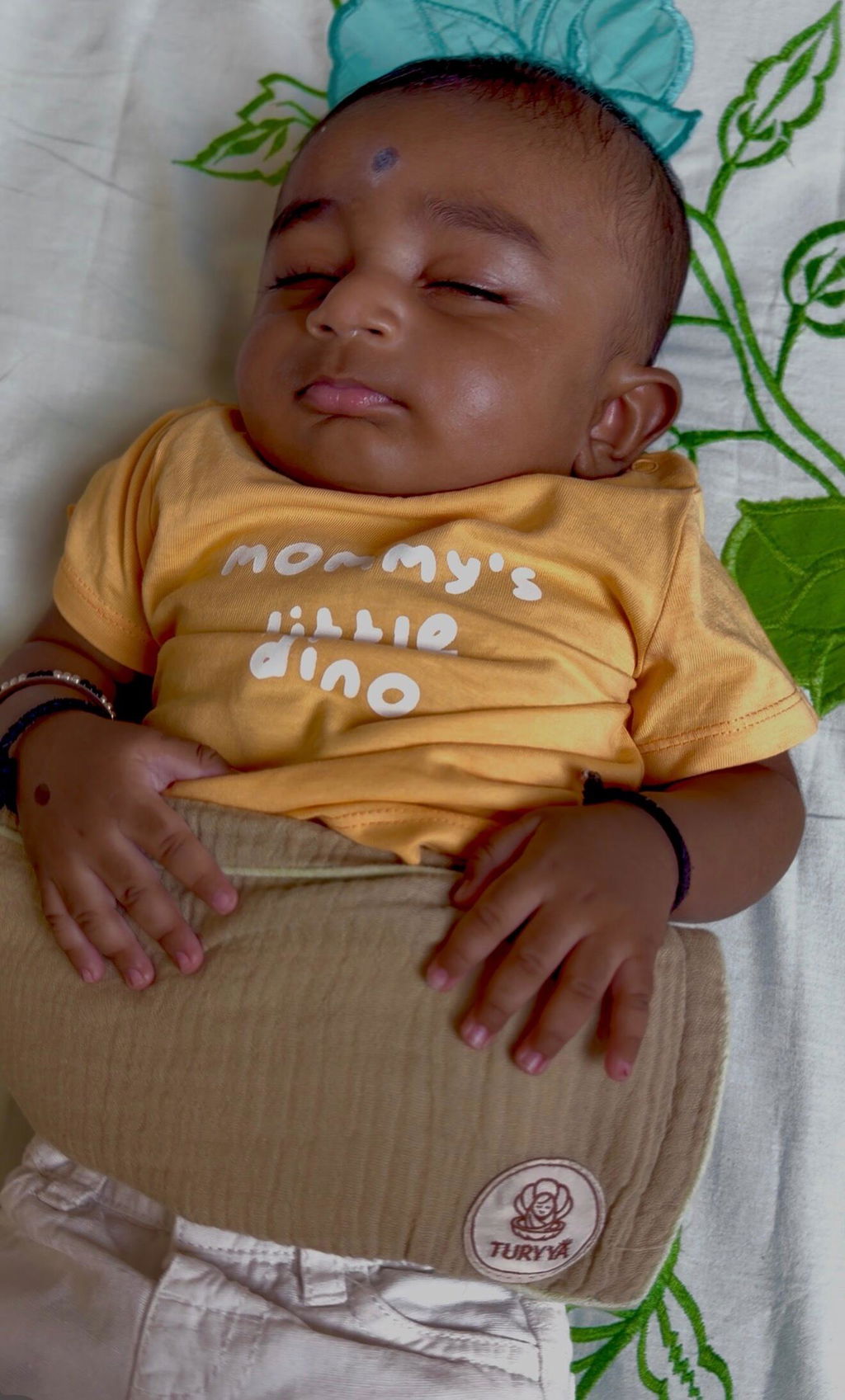
Gentle warmth calms the tummy whether the cause is gas, cramping or general discomfort. A warm compress relaxes the muscles, eases spasms and comforts a baby who is curled up in pain. Use a soft cloth or a warm compression pillow, and always check the temperature on your own inner wrist first. It should feel comfortably warm, never hot.
4. Ajwain potli (warm ajwain compress)
This is a much-loved Indian remedy, and it gives the baby two benefits at once.
- Dry-roast a generous handful of ajwain (carom seeds) on a tawa for a minute or two until warm and fragrant.
- Tie it into a small bundle in a soft muslin cloth.
- Test the potli on your inner wrist, then press it gently on the baby's tummy for a few seconds at a time, moving it around the navel.
The filled potli gives a soft, weighted compression that babies find soothing. And when ajwain is warmed it releases thymol, its natural aromatic compound, which is traditionally valued for easing gas and supporting digestion.
Safety first: babies' skin burns far more easily than ours. Never heat a potli or compress in a microwave, never leave it on unattended, and stop at once if the skin turns red.
What a mother can do during a colic episode
When the crying starts, work through a calm checklist instead of trying everything at once.
- Rule out the basics: hunger, a wet nappy, too hot or too cold, a tight piece of clothing.
- Burp again: hold the baby upright on your shoulder and pat gently; some babies need two or three burps.
- Try a soothing hold: the "tiger in the tree" hold, with baby lying tummy-down along your forearm, puts gentle pressure on the tummy.
- Bring in warmth: a warm tummy massage or a warm potli, as described above.
- Lower the noise: move to a dim, quiet room; swaddle, rock slowly or switch on white noise.
- Give it time: stay with one method for a few minutes before switching. Constant changes can overstimulate the baby further.
Most importantly, look after yourself. Colic is not a sign of bad mothering. If you feel overwhelmed or angry, it is completely okay to put the baby down safely on their back in the cot and step away for 5 to 10 minutes to breathe. Never shake a baby, however tired you are. Eat, drink water, rest when the baby rests, and tell someone if you are feeling persistently low or anxious; postpartum mood changes are common and treatable.
How family members can support the mother
A colicky baby needs a calm mother, and a calm mother needs a team. In Indian homes, the family can make all the difference.
- Take shifts: let the father, grandparent or another adult take over the evening crying hours so the mother can sleep, bathe or simply eat a hot meal.
- Handle the house: cooking, laundry and visitors are jobs others can take off her plate entirely.
- Learn the soothing techniques: anyone can burp, rock, walk the baby or prepare a warm ajwain potli. Do not leave it all to the mother.
- Skip the blame: comments like "your milk is not enough" or "you are eating the wrong things" hurt deeply and are rarely true. Colic is nobody's fault.
- Limit visitors in the evenings: fewer people and less noise often means less crying.
- Watch her wellbeing: notice if she seems persistently sad, anxious, not sleeping even when she can, or withdrawn. Encourage her to talk to her doctor.
- Say it out loud: a simple "you are doing a great job" can carry a tired mother through a long night.
When to see a doctor
Colic is diagnosed only after other causes are ruled out, so always mention persistent crying at your baby's check-up. See a paediatrician promptly if your baby has any of these:
- Fever (38°C or higher in a baby under 3 months is an emergency)
- Vomiting that is forceful, green, or happens after every feed
- Blood in the stool, or very hard or very watery stools
- Poor feeding, fewer wet nappies, or weight not increasing
- Unusual drowsiness, floppiness, or a weak or very high-pitched cry
- A swollen, hard tummy that stays tender even when the baby is calm
- Crying that suddenly changes in pattern, or starts after a fall or injury
- Crying that continues beyond 4 months of age
Trust your instinct. If something feels wrong, it is always worth getting checked.
Frequently asked questions about baby colic
At what age does colic start and stop? Colic usually starts at 2 to 3 weeks, peaks around 6 weeks, and eases by 3 to 4 months of age.
Is colic harmful to my baby? Colic is distressing but not harmful in an otherwise healthy, growing baby. The hardest part is usually the strain on parents.
Is ajwain potli safe for newborns? A warm ajwain potli is a traditional and gentle remedy when it is only lukewarm, tested on your wrist first, and used for short periods under supervision.
Can I apply hing on my baby's stomach? Yes, a tiny pinch of hing mixed with warm water or oil can be applied around the navel on healed, unbroken skin. Never feed hing to a baby.
Which oil is best for a colic massage? Mild oils such as coconut or sesame oil, warmed to lukewarm, work well. Patch test any oil on a small area first.
Why does my baby cry more in the evening? Evening crying is very common. Tiredness, overstimulation from the day and gas building up after several feeds all play a part.
This phase will pass
Colic can make the days feel endless, but it is a phase, not forever. Understand which type your baby has, lean on gentle traditional comfort like warm oil, hing and an ajwain potli, and let your family share the load.
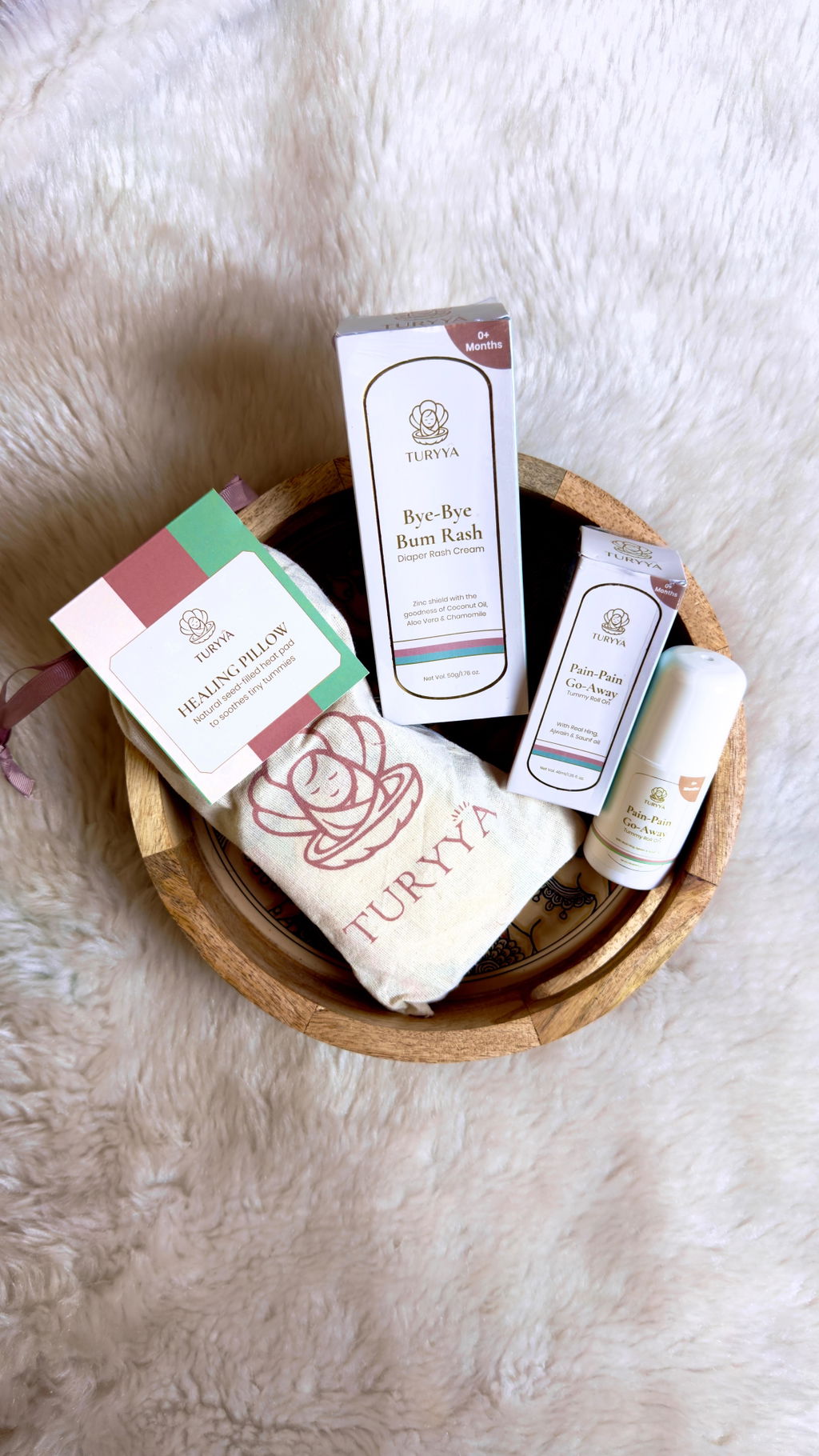
At Turyya, we bring that same nani ka nuskha thinking into everyday baby care. Our Healing Pillow gives warm compression across the whole tummy and can be warmed before use, so soothing your baby takes less effort on the hardest evenings. Explore it on its own or as part of our Newborn Care Bundle.
This article is for general information and is not a substitute for medical advice. Always consult your pediatrician about your baby's health.