Few words frighten new parents more than sudden infant death syndrome. Most of us first hear about SIDS in a hurried warning, often attached to a product: "Don't use that pillow, it causes SIDS." The fear sticks, but the understanding rarely does.
This guide explains what SIDS actually is, why it happens, how common it is in India compared with the rest of the world, and the simple, proven steps that lower your baby's risk. Knowing the real risk factors protects your baby far better than fearing everything in the nursery.
What is sudden infant death syndrome (SIDS)?
SIDS is the sudden, unexplained death of a baby under one year old, usually during sleep, where no cause is found even after a full investigation, including an autopsy and a review of the circumstances. It is a diagnosis of exclusion: doctors call it SIDS only when everything else has been ruled out.
SIDS is most common between 1 and 4 months of age, and the large majority of cases happen before 6 months.
It helps to know three related terms, because they are often mixed up:
- SUID (sudden unexpected infant death): the umbrella term for all sudden, unexpected infant deaths.
- SIDS: the deaths within SUID that stay unexplained after investigation.
- Accidental suffocation or strangulation in bed: deaths with a clear physical cause, such as a baby's face pressed into soft bedding or an adult rolling onto the baby.
This difference matters. A soft pillow in a cot is mainly a suffocation risk, not a mysterious SIDS trigger. Both are prevented by the same safe sleep habits.
Why does SIDS happen?
The exact cause of SIDS is still not fully understood, but researchers widely use the "triple-risk model". It says SIDS happens when three things come together at the same time:
- A vulnerable baby: for example, a baby born premature or with low birth weight, or one with a subtle difference in the part of the brain that controls breathing, heart rate and waking up.
- A critical age: the first 6 months, when breathing and arousal systems are still maturing.
- An outside stressor: such as sleeping on the tummy, overheating, soft bedding near the face, or exposure to cigarette smoke.
A healthy baby who rebreathes stale air or gets too warm will usually stir, turn or cry. A vulnerable baby may not wake up in response. That is why removing the outside stressors matters so much: it is the one part of the triangle parents can control.
Other known risk factors include smoking during pregnancy or around the baby, alcohol or drug use by the person sleeping with the baby, a mother under 20, little or no antenatal care, and boys being slightly more at risk than girls.
SIDS statistics: the world vs India
SIDS rates vary widely between countries. Some of that is real, and some comes from differences in how deaths are investigated and recorded.
|
Country or group |
SIDS rate (per 1,000 live births) |
Year |
Source |
|---|---|---|---|
|
United States |
0.40 |
2021 |
|
|
New Zealand and United States (highest group) |
0.5 or more |
2005 |
|
|
European Union average |
about 0.15 |
2011 to 2018 |
|
|
Japan and the Netherlands (lowest group) |
0.2 or less |
2005 |
|
|
England and Wales, White British babies (unexplained infant deaths) |
0.4 |
2006 to 2012 |
|
|
England and Wales, babies of Indian origin (unexplained infant deaths) |
0.1 to 0.2 |
2006 to 2012 |
|
|
India |
No national data |
n/a |
In absolute numbers, the US recorded about 3,400 sudden unexpected infant deaths in 2024, of which 1,351 were classed as SIDS (CDC).
India is the big gap in this picture. Researchers note that no study has yet measured how common SIDS is in India, and there is no country-wide data on it. Yet the Global Burden of Disease 2021 analysis, which models deaths where records are missing, estimated around 4,250 SIDS deaths in India that year, the second-highest number of any country, largely because so many babies are born here (Translational Pediatrics).
Why reported SIDS is lower in India
You rarely hear of SIDS in Indian families. Two things explain most of that.
1. Many cases are simply not documented
A SIDS diagnosis needs an autopsy and a death-scene investigation. In India, most infant deaths at home are not investigated this way, and families understandably often decline a post-mortem. These deaths get recorded under "ill-defined causes", or not at all. Researchers studying Kolkata found that awareness of SIDS among caregivers was very low and safe sleep advice from health workers was limited (Frontiers in Pediatrics, 2025). So the low numbers partly reflect missing records, not missing deaths.
2. Indian babies sleep close to their parents
In most Indian homes, the baby sleeps in the same room as the mother, often with grandparents nearby. This matters: the American Academy of Pediatrics says that room-sharing can cut the risk of SIDS by as much as 50% (AAP / HealthyChildren.org). A parent close by hears changes in breathing, wakes easily for feeds, and the baby sleeps more lightly.
There is an important line here, though. The protective habit is room-sharing, with the baby on their own firm surface beside your bed. Bed-sharing, with the baby in the adult bed, carries its own risks of suffocation and is not recommended by the AAP. Many Indian families bed-share, so it is worth knowing the difference.
3. Other protective habits
Studies of families of Indian origin abroad back this up. In New Jersey, Indian American families bed-shared more than any other group, yet had the lowest rate of sudden unexpected infant death. Researchers linked this to babies being placed on their backs, very low smoking and alcohol use, and grandparents sharing childcare so mothers were less exhausted (Rutgers). In England and Wales, babies of Indian origin had about half the rate of unexplained infant death seen in White British babies (J Epidemiol Community Health). Long breastfeeding, common in India, also lowers SIDS risk.
The takeaway: our traditions protect babies in real ways. They are not a guarantee, and they work best when combined with safe sleep basics.
How to prevent SIDS: safe sleep precautions
There is no way to guarantee a baby will never be affected by SIDS, but these steps from the AAP's safe sleep guidance lower the risk a great deal (AAP / HealthyChildren.org).
- Back to sleep, every sleep. Place your baby on their back for naps and at night until 1 year of age. Once your baby can roll both ways on their own, you do not need to turn them back.
- Firm, flat surface. Use a cot, crib or bassinet with a firm mattress and a tightly fitted sheet. Avoid sofas, armchairs, soft mattresses, gaddas and water beds for sleep.
- Room-share, do not bed-share. Keep the baby's cot or bassinet next to your bed for at least the first 6 months, ideally the first year.
- Keep the sleep space bare. No pillows, quilts, bolsters, soft toys or bumpers in the baby's sleep space while they sleep.
- Do not overheat. Dress the baby in one more light layer than you would wear. Skip caps indoors at night. Check the back of the neck: it should feel warm, not sweaty.
- Smoke-free home. No smoking during pregnancy, and no smoking in the home or car around the baby.
- Breastfeed if you can. Any breastfeeding is protective, and exclusive breastfeeding protects most.
- Offer a pacifier at sleep time, once breastfeeding is well established. Do not force it or tie it around the neck.
- Never sleep with the baby on a sofa or chair. If you feel yourself dozing during a night feed, move to your bed, clear away pillows and blankets near the baby, and put the baby back in their own space as soon as you wake.
- Keep up with vaccinations and check-ups. Vaccinated babies are at lower risk of SIDS.
- Supervised tummy time when awake. It strengthens the neck and shoulders and helps prevent a flat head from back-sleeping.
If you do share a bed despite the advice, at least avoid it completely if anyone in the bed smokes, has had alcohol or sedating medicine, or is extremely exhausted, or if the baby was premature or is under 4 months. Keep pillows and heavy quilts away from the baby, and never put the baby between two adults.
Pillows, nests and baby products: separating fear from fact
Scroll through any parenting group and you will see it: every baby nest, pillow, bolster or lounger "causes SIDS" and must be thrown out. That fear is understandable, but it misses the point.
Yes, these products can be risky. Soft, raised or padded surfaces can press against a baby's face or let them roll into a position where they cannot breathe freely. That is why the AAP advises against using them as a sleep surface in the first year.
But the risk lies in how and when a product is used, not in the product simply existing in your home:
- During sleep, especially unsupervised sleep: keep the sleep space bare. No nests, pillows, bolsters or soft toys, day or night, for the first year.
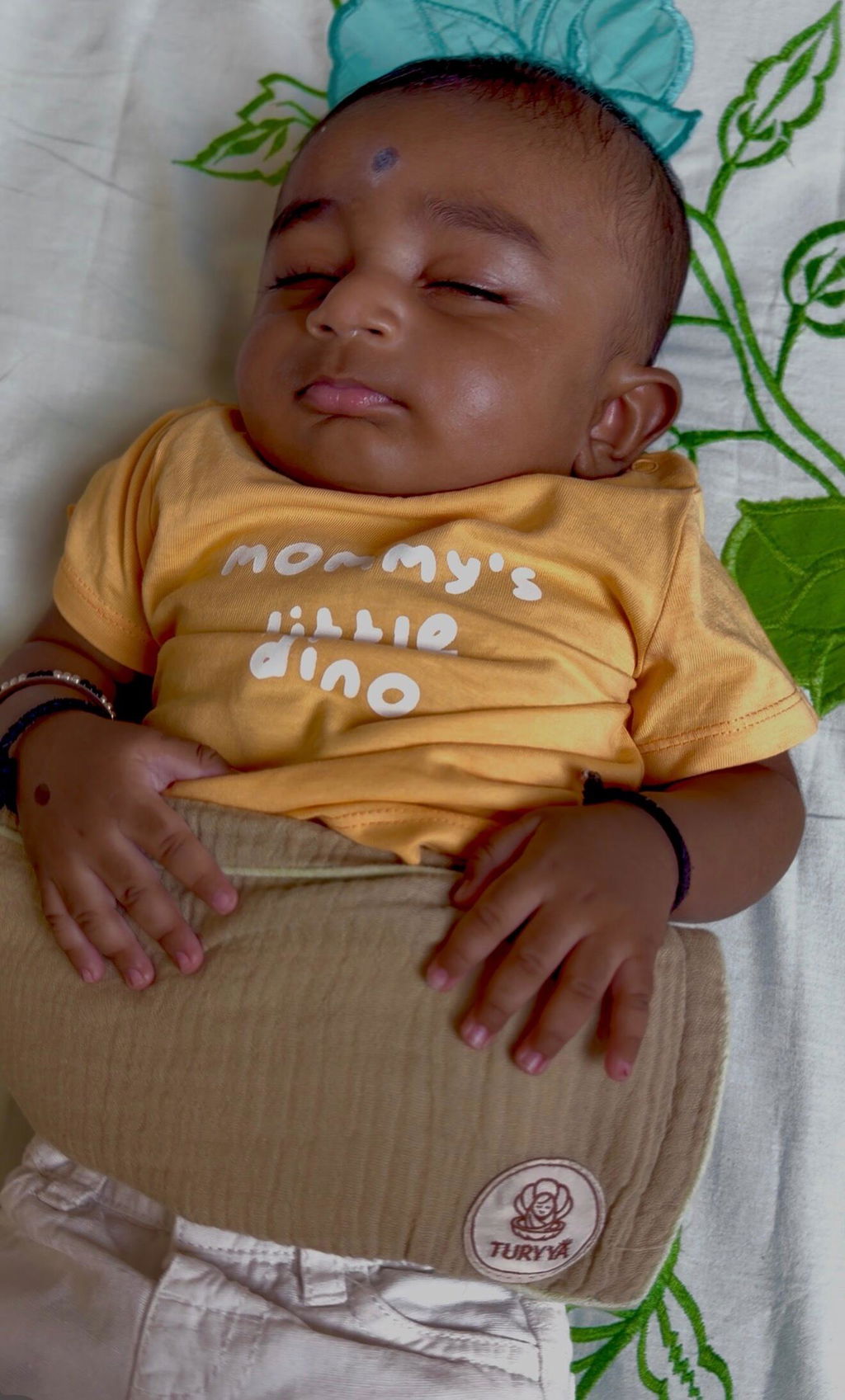
- During awake, supervised time: a lounger, nest or support pillow used while an adult is actively watching is a very different situation. If the baby dozes off, move them to their cot or bassinet.
- As the baby grows: a pillow or bolster that is unsafe for a sleeping 2-month-old may be perfectly fine for a toddler.
What genuinely protects babies is not avoiding every soft object forever. It is understanding why SIDS and suffocation happen, keeping the sleep space safe, and staying close. A parent who knows the reasons can make good choices about any product, rather than following rumours.
Frequently asked questions about SIDS
At what age is SIDS risk highest? Between 1 and 4 months. Most cases happen before 6 months, and the risk becomes very low after the first birthday.
Does room-sharing really reduce SIDS? Yes. The AAP says room-sharing, with the baby on a separate surface next to your bed, can lower SIDS risk by as much as 50%.
Is co-sleeping in the same bed safe? The AAP does not recommend bed-sharing at any age because it raises the risk of suffocation. Room-sharing gives the closeness without that risk.
Can my baby sleep with a pillow? Not in the first year. Babies do not need a pillow, and a pillow near the face is a suffocation risk during sleep.
Is SIDS common in India? Nobody knows exactly, because India has no national SIDS data and most infant deaths at home are not investigated. Reported cases are low, but modelled estimates suggest the real number is significant.
Can SIDS be completely prevented? No, but following safe sleep practices lowers the risk substantially.
Knowledge over fear
SIDS is rare, and every simple habit above makes it rarer. Keep your baby close, on their back, on a firm and bare surface, in a smoke-free and not-too-warm room. Beyond that, trust yourself. Understanding why the rules exist is what lets you parent calmly instead of fearfully.
This article is for general information and is not a substitute for medical advice. Talk to your paediatrician about your baby's sleep.
Sources
- CDC: Data and Statistics for SUID and SIDS
- AAP / HealthyChildren.org: How to Keep Your Sleeping Baby Safe
- AAP: Evidence Base for 2022 Safe Infant Sleeping Recommendations
- Rates of SUID before and during COVID-19 (PMC)
- Pediatrics: International Trends in SIDS
- Ethnic variation in unexplained infant deaths, England and Wales (PMC)
- Frontiers in Pediatrics 2025: SIDS risk and protective factors in Kolkata
- Translational Pediatrics: Global burden of SIDS, 1990 to 2021
- Rutgers: Indian Americans have fewer sudden infant deaths
- SIDS mortality in Europe, 2011 to 2018